Prime and Composite Numbers: A Fun, Free No-Prep Packet
Prime and composite numbers look like a one-day skill, teacher friend, and then the quiz comes back with 9 circled as prime and 2 crossed out as composite. Students need more than the definition. They need to factor, sort, and hunt for primes a few different ways before it sticks.
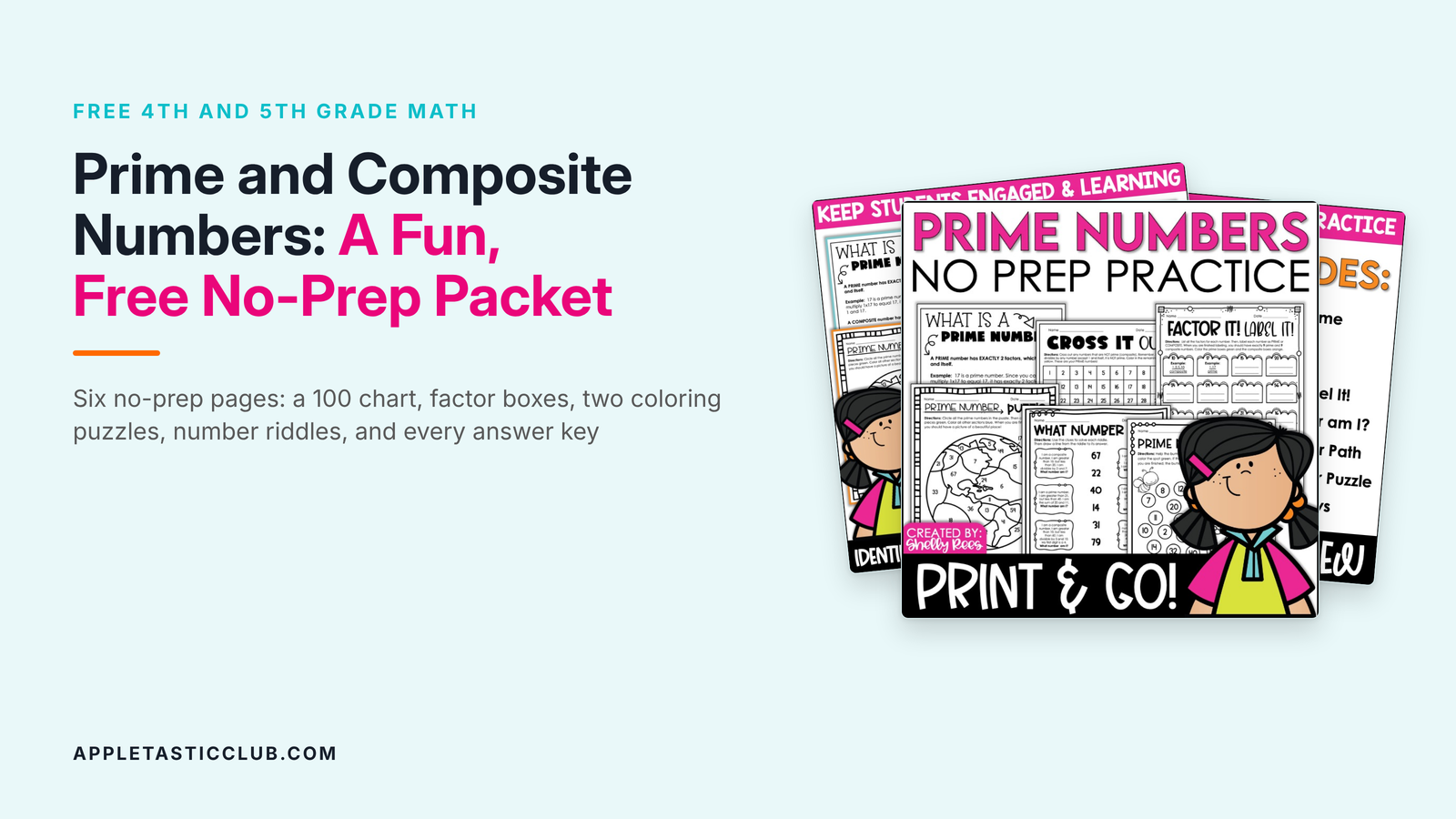
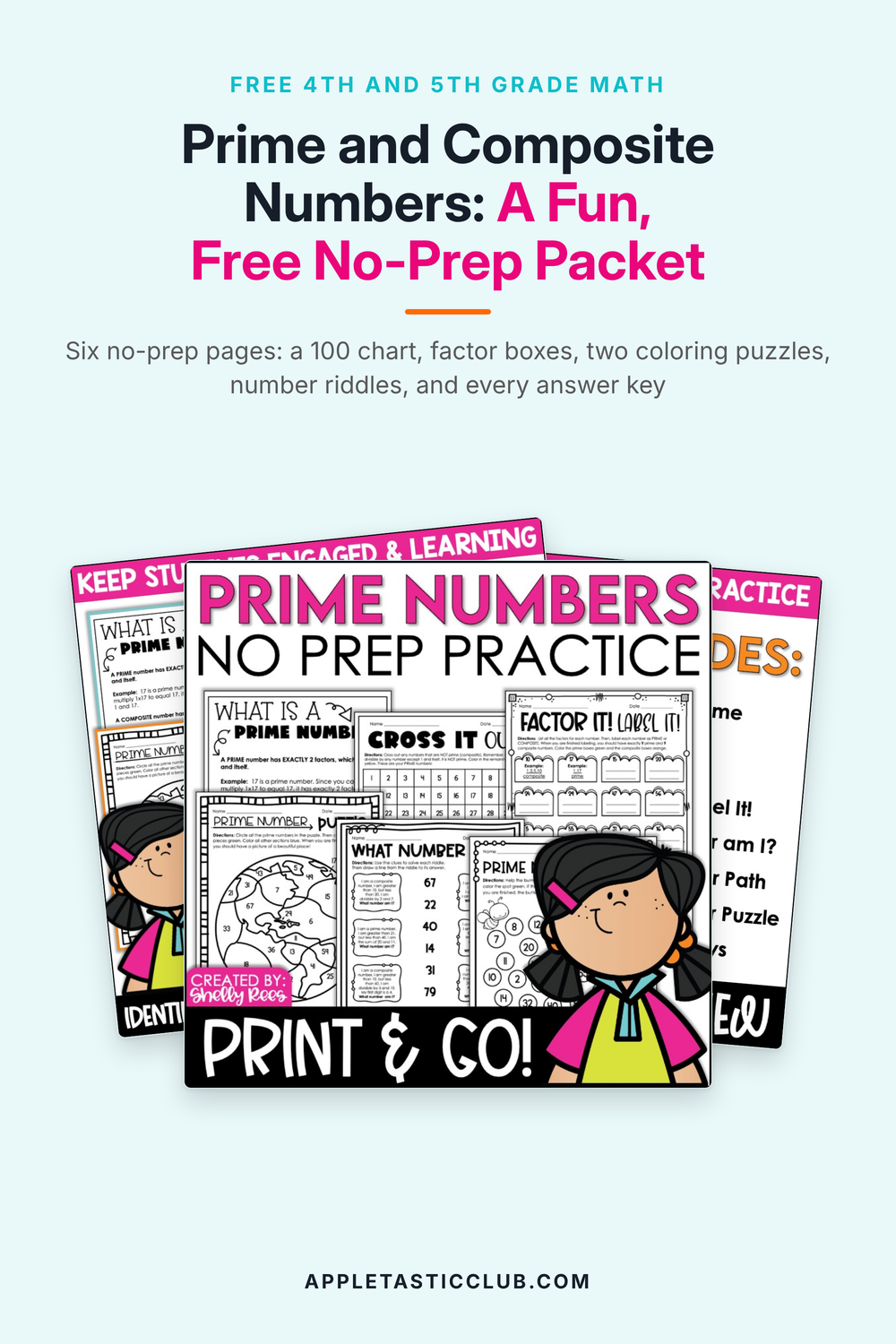
This one is ours, from the Appletastic Club, and it is free: Prime Numbers No Prep Practice, six pages that go from what a prime number is to a 100 chart, factor boxes, two coloring puzzles, and number riddles, with every answer key. Print it and use it tomorrow.
Start with the two numbers that fool everyone
The first page is a plain-language reference. A prime number has exactly two factors, 1 and itself (17 is the example), and a composite number has more than two (12, with 1, 2, 3, 4, 6, and 12). Then it answers the two questions students always ask. Are all even numbers composite? Almost. The number 2 is the exception, because its only factors are 1 and itself. What about 1? It is neither prime nor composite, since it has only one factor.
Read it together, or project it and leave it up for the rest of the week. It is the page students go back to when they get stuck.
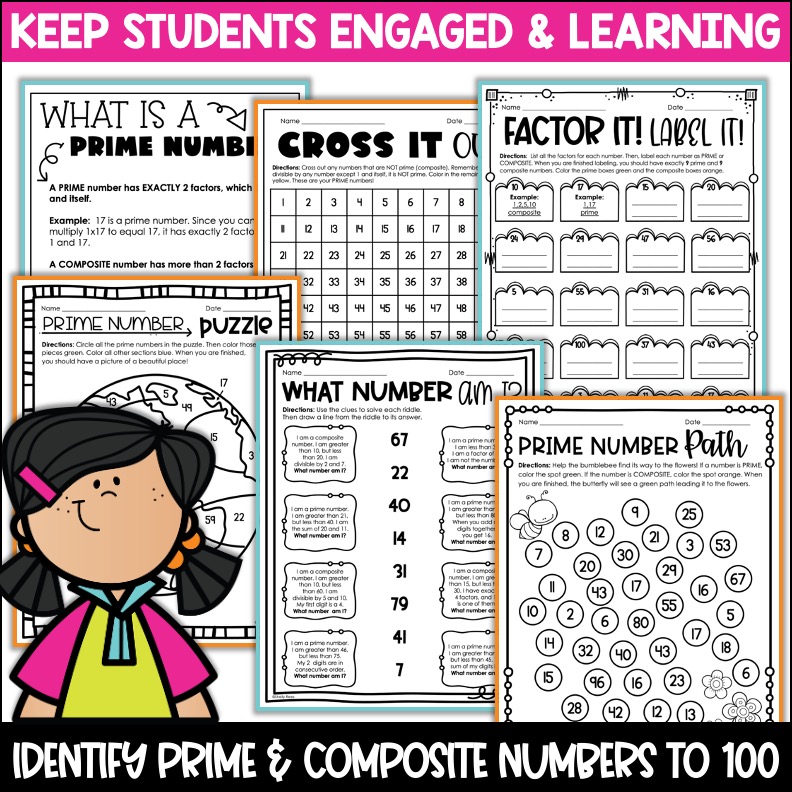
Cross It Out: a 100 chart that leaves only the primes
Students cross out every number that is not prime and color the boxes left standing yellow. When they finish, 25 yellow boxes remain, the 25 prime numbers under 100, and the chart becomes a reference they made themselves.
A quick way to run it as a class: cross out 1, then the multiples of 2, 3, 5, and 7, and talk about why nothing else needs checking.
Factor It! Label It!
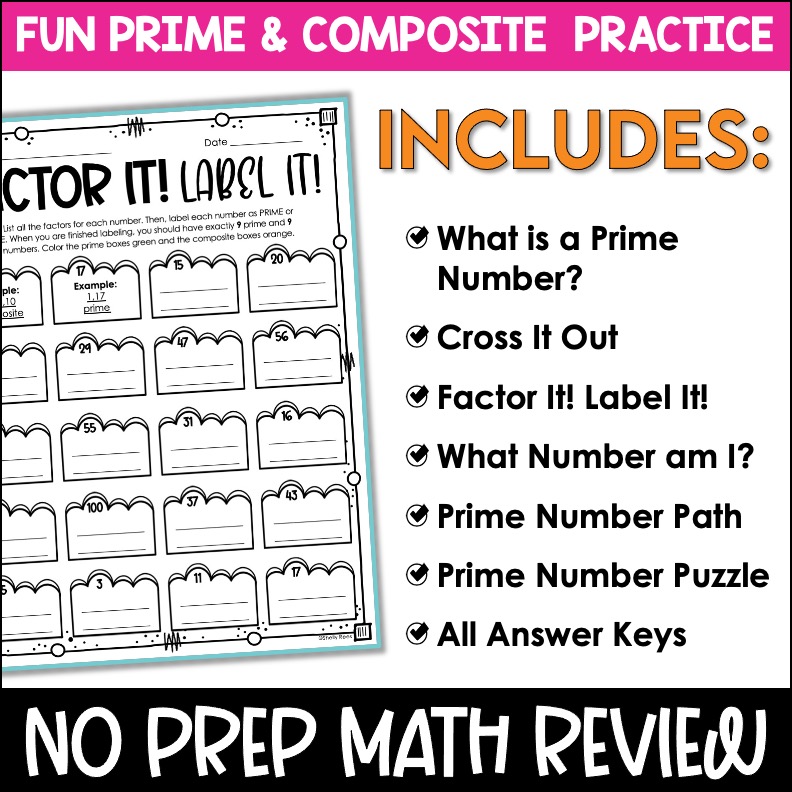
Eighteen numbers, from 3 to 100, each in its own box. Students list all the factors, then label the number prime or composite. Two worked examples, 10 and 17, sit at the top of the page, and there is a built-in check: when they finish, they should have exactly 9 prime and 9 composite numbers. Prime boxes get colored green and composite boxes orange, so a wrong label shows from across the room.
Two coloring puzzles and eight riddles
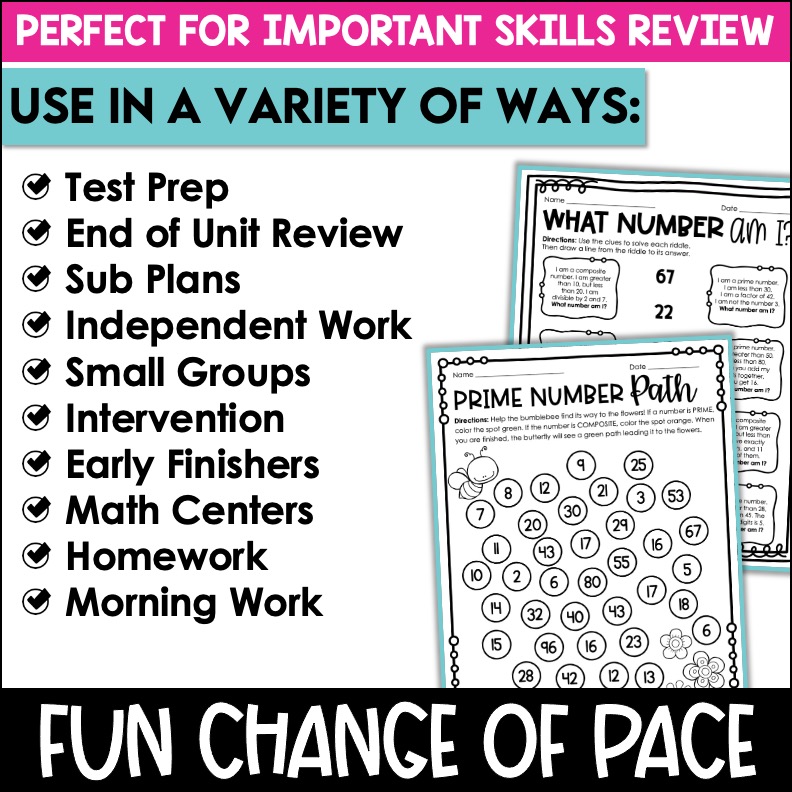
The Prime Number Puzzle is a globe divided into 23 numbered sections. Students circle the primes, color those sections green and the rest blue, and the continents appear. The Prime Number Path has 37 numbered spots between a bumblebee and some flowers: prime spots turn green, composite spots turn orange, and the green ones make the path.
What Number Am I? is eight riddles matched to eight answers. Each one mixes prime or composite with a second clue: "I am a composite number. I am greater than 10, but less than 20. I am divisible by 2 and 7." Students have to reason with factors, not just recall a list.
Ways to use it
Nothing to cut or laminate. Print the pages you want and go. Teachers use this packet for test prep, end-of-unit review, sub plans, independent work, small groups, intervention, early finishers, math centers, homework, and morning work. One page a day for a week is a full review of the skill.
Here is the free file
Click it. It opens on the downloads page. No email needed.
More prime and composite practice in the Club
- Prime Numbers No Prep Practice (this packet, in the 4th and 5th Grade Clubs)
- Prime and Composite Numbers Jeopardy, a digital review game
- Prime and Composite Numbers homework sheets, four pages with spiral review
- Spin to Win: Prime and Composite Numbers, from the Numbers and Operations Centers
- Prime Pumpkins (Halloween Math), Prime Numbers Patty (St. Patrick's Day), and Prime Number Path (Easter) in the seasonal packets
See everything in the Club, grade by grade
Want every 4th and 5th grade math resource right now?
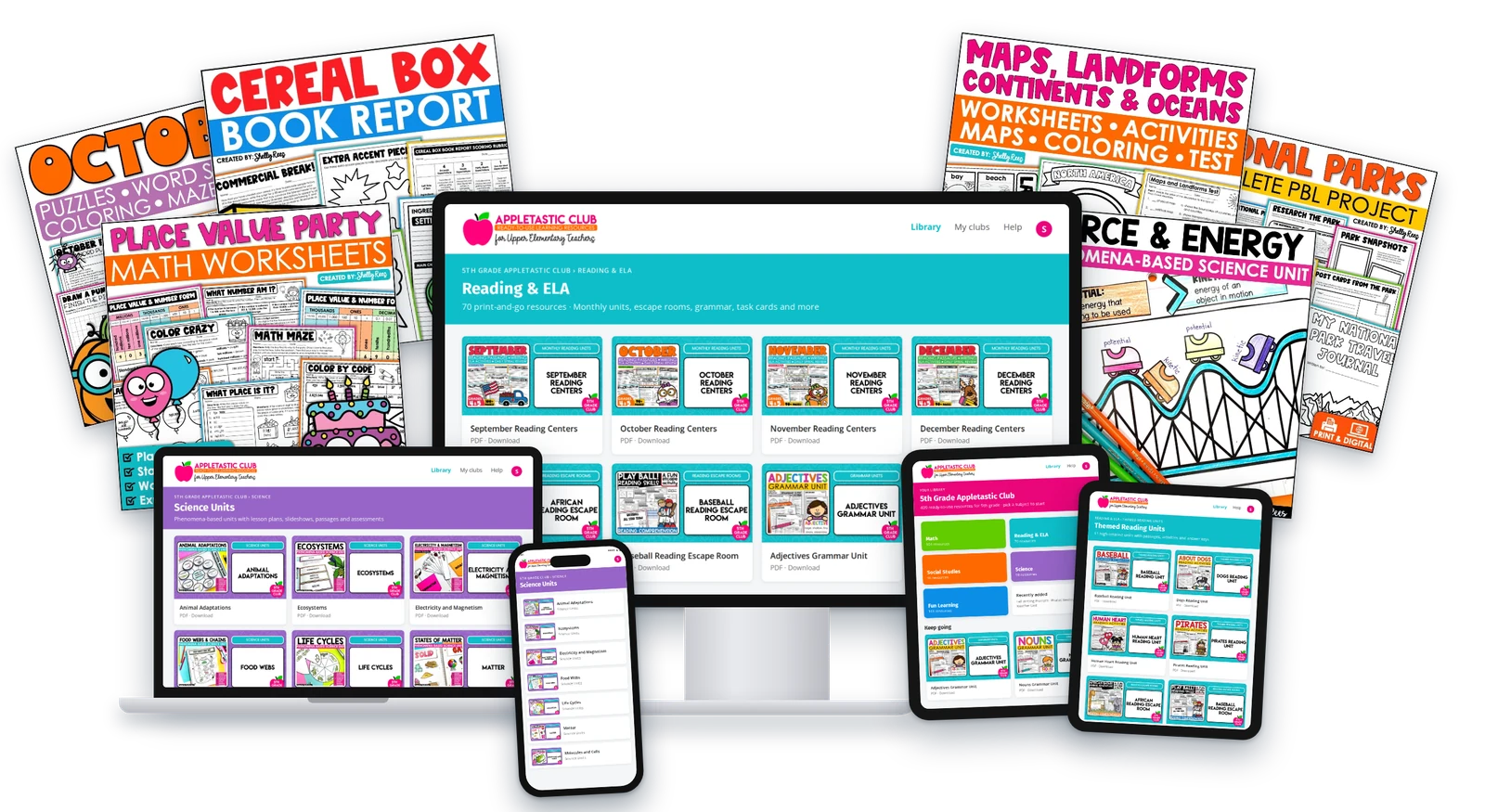
The Appletastic Club has over 1,500 resources for 4th and 5th grade teachers: math, reading & ELA, social studies, science, and all the fun stuff, with new ones added regularly. Find what you need, print it, teach it.
Get the Book Report Lap Book. Free.
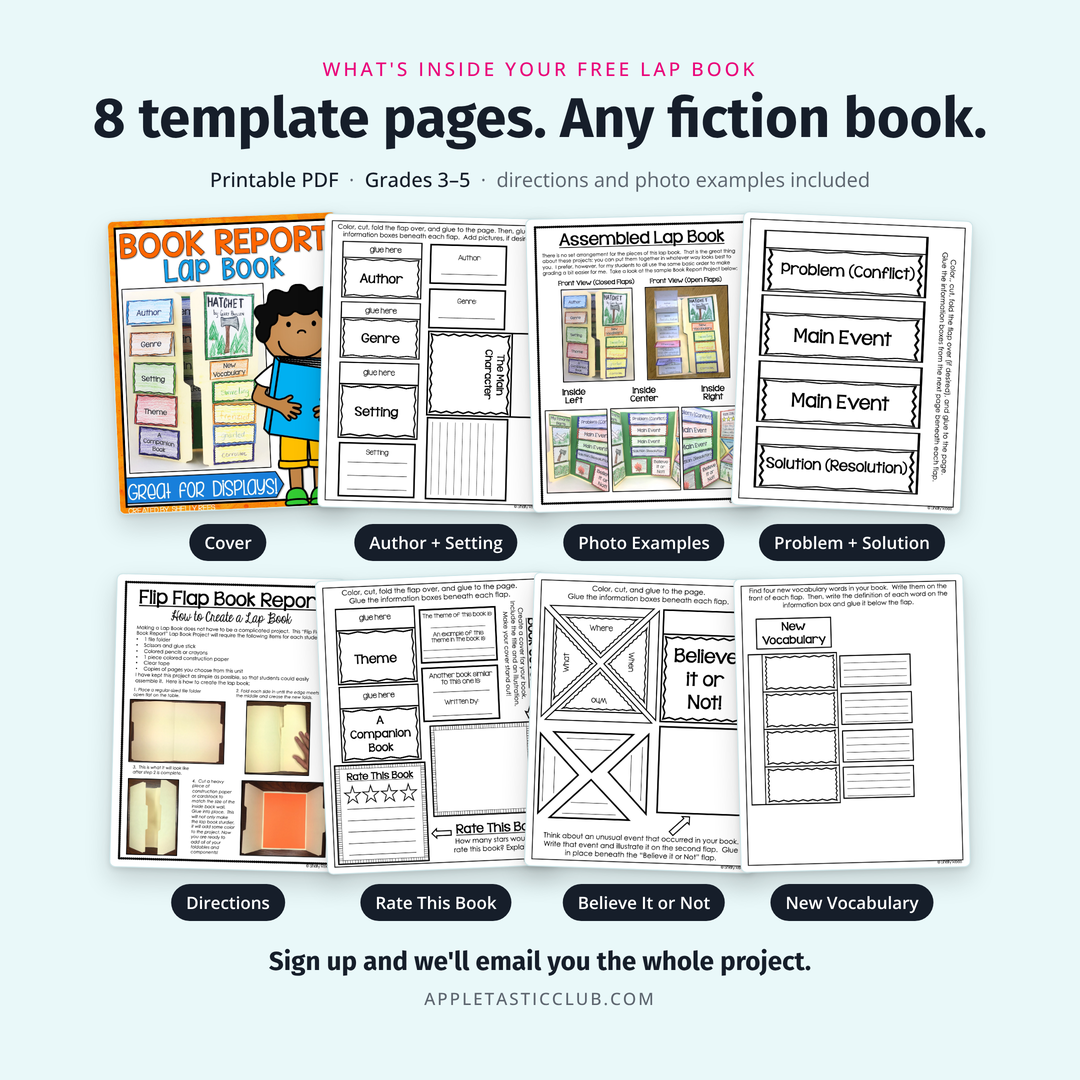
A complete book report project for grades 3 to 5, sent to your inbox. It works with any fiction book, and it comes from the same Club this one did.
Pin this for later
Want every resource, ready to teach?
The Appletastic Club has over 1,500 resources for 4th and 5th grade teachers: math, reading & ELA, social studies, science, and all the fun stuff. Find what you need, print it, teach it.
Get the Book Report Lap Book. Free.
A complete book report project for grades 3–5, sent to your inbox. It works with any fiction book.
We are teachers. Your email is safe with us.