Free December Reading Passages, ELA Centers, and Activities
December in a 4th or 5th grade classroom is a few short weeks of concerts, parties, and students who can see the break from where they sit, teacher friend. You still have to teach reading and writing, and you would like it to feel like December without planning a new unit from scratch.
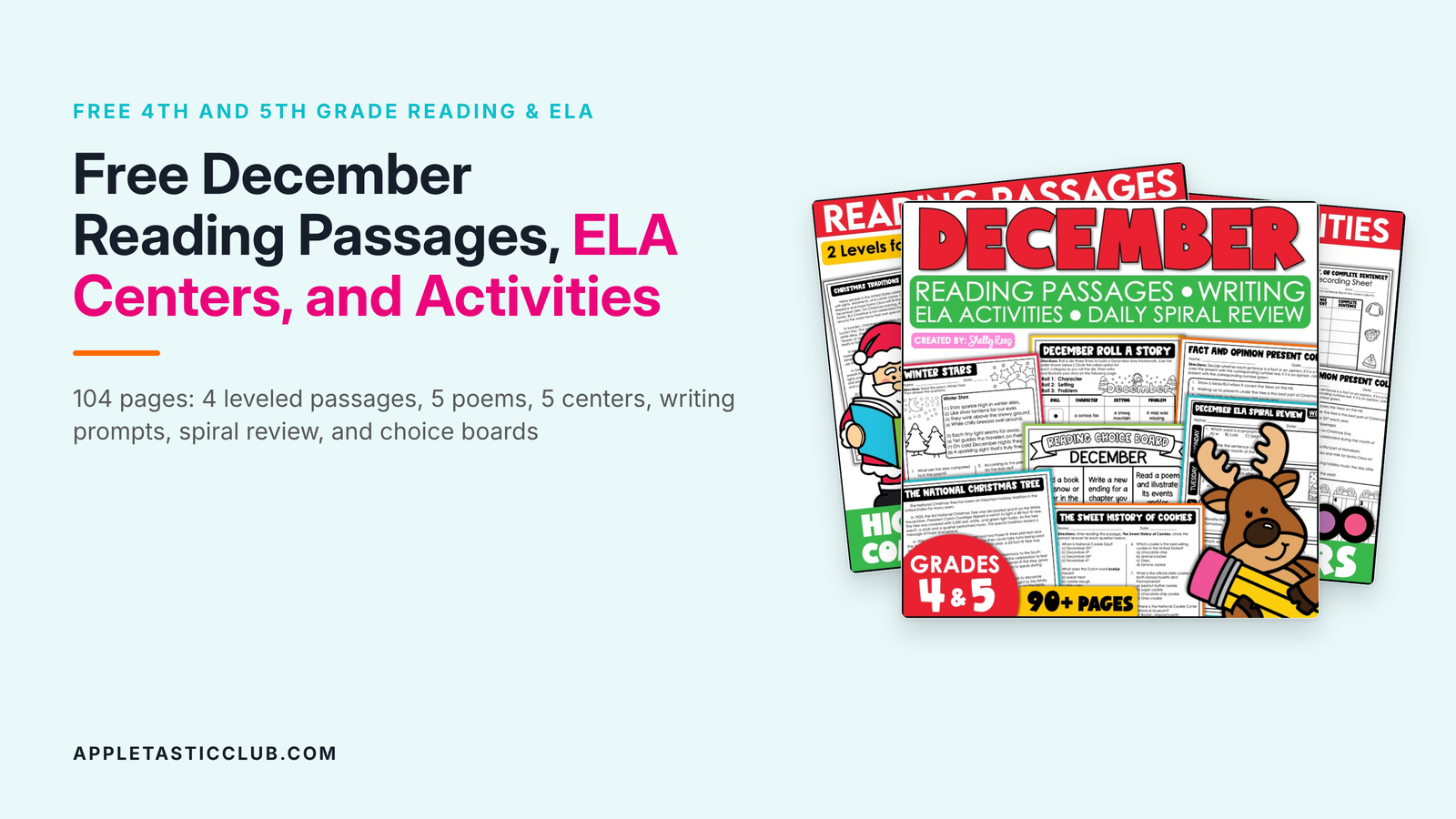
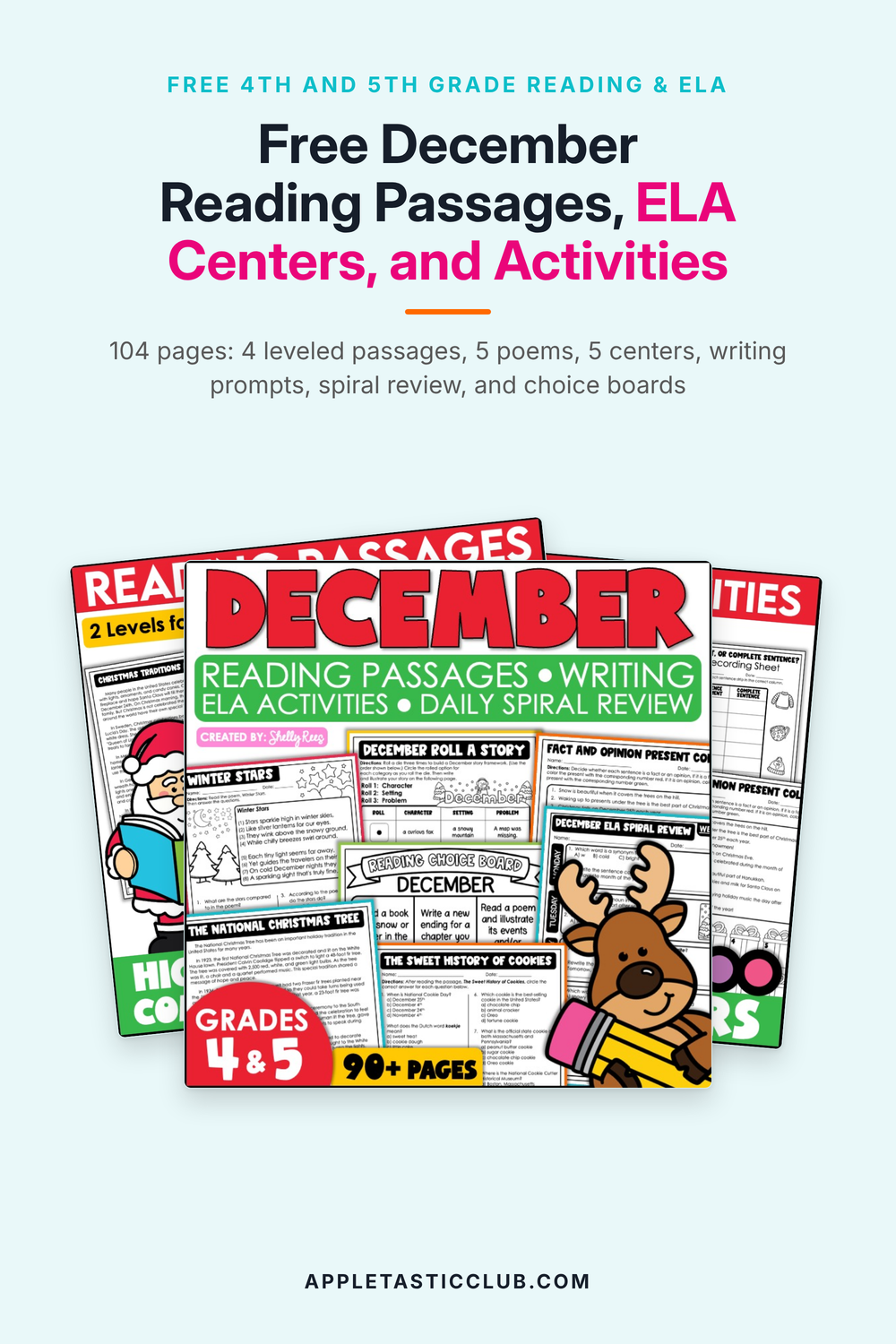
This one is ours, from the Appletastic Club, and it is free: the December Reading and ELA packet, 104 pages of reading passages, poems, ELA centers, writing, daily spiral review, and choice boards for 4th and 5th grade, with every answer key. Here is what is in each section and five ways to use it, so you can print the parts you need and go.
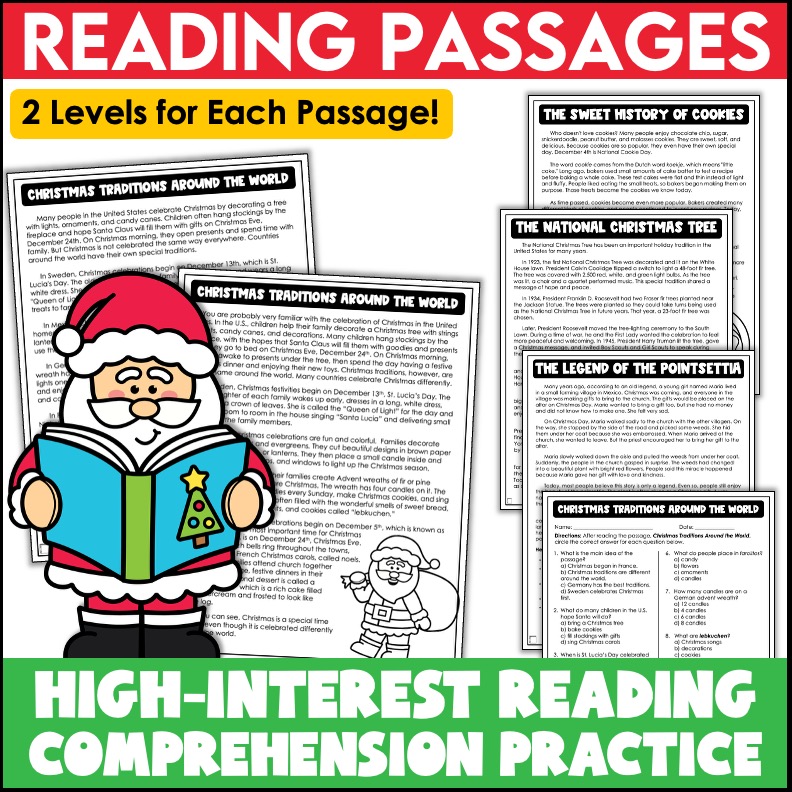
Four reading passages, each at two levels
The passages are nonfiction and tied to December dates: The Sweet History of Cookies (National Cookie Day, December 4), The Legend of the Poinsettia (Poinsettia Day, December 12), The National Christmas Tree, and Christmas Traditions Around the World. Each passage comes at two reading levels with the same content, and one sheet of ten multiple-choice questions fits both, so the whole class answers the same questions from the passage that fits them. A small symbol in the bottom corner tells the levels apart, and students never see a label.
Five ways to use the passages:
- A whole-class close read: project the harder level, hand the easier level to the students who need it, and answer the ten questions together.
- A reading center: one passage and its questions in a folder, with the answer key stapled to the back for self-checking.
- Small groups: each group reads the level it needs, and because the questions match, one discussion works for everyone.
- Test prep: ten multiple-choice questions on a timer, then go over the two most-missed questions as a class.
- Follow the calendar: Cookies on December 4, the Poinsettia on December 12, and Traditions Around the World the week before break.
Five poems with questions
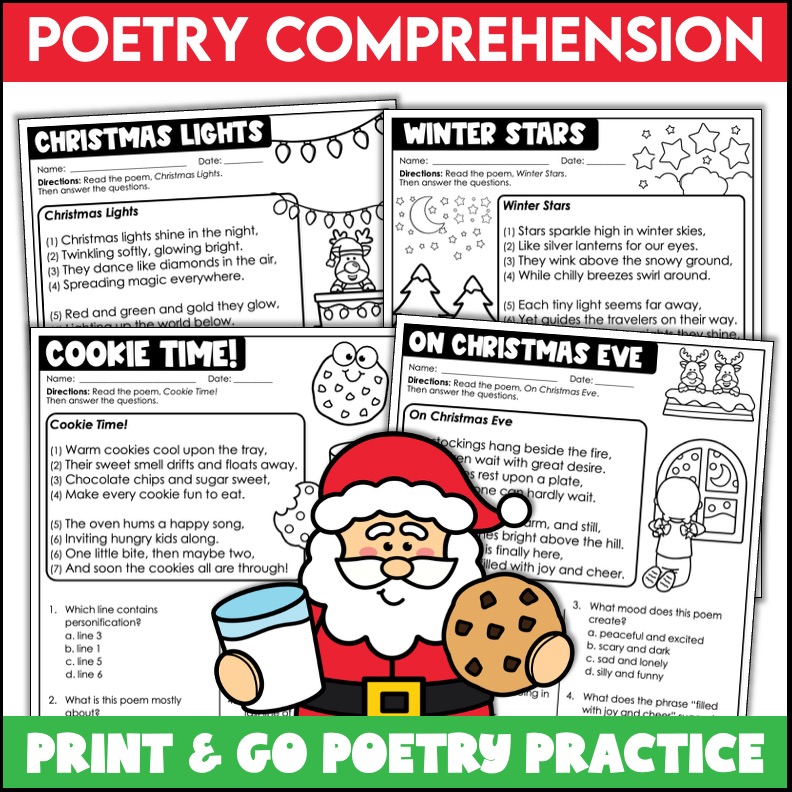
A Visit from St. Nicholas is an excerpt of the classic poem with five written-response questions on setting, rhyme, alliteration, and the word luster. Then come four short original poems with four multiple-choice questions each: Cookie Time!, Winter Stars, Christmas Lights, and On Christmas Eve. The questions ask about personification, simile, alliteration, rhyme, mood, theme, and inference, the poetry skills that show up on every spring test.
Five ways to use the poems:
- One poem a week: the four short poems through December, and A Visit from St. Nicholas the last week before break.
- A poem-of-the-day warm-up: read it aloud, answer the four questions, done in five minutes.
- A poetry center, with the figurative-language questions as the task and the answer key in the folder.
- Fluency practice: partners read an eight-line poem aloud three times, then answer the questions together.
- A model for the writing later in the packet: students borrow a line or a rhyme pattern for their own haiku.
Five ELA centers and games
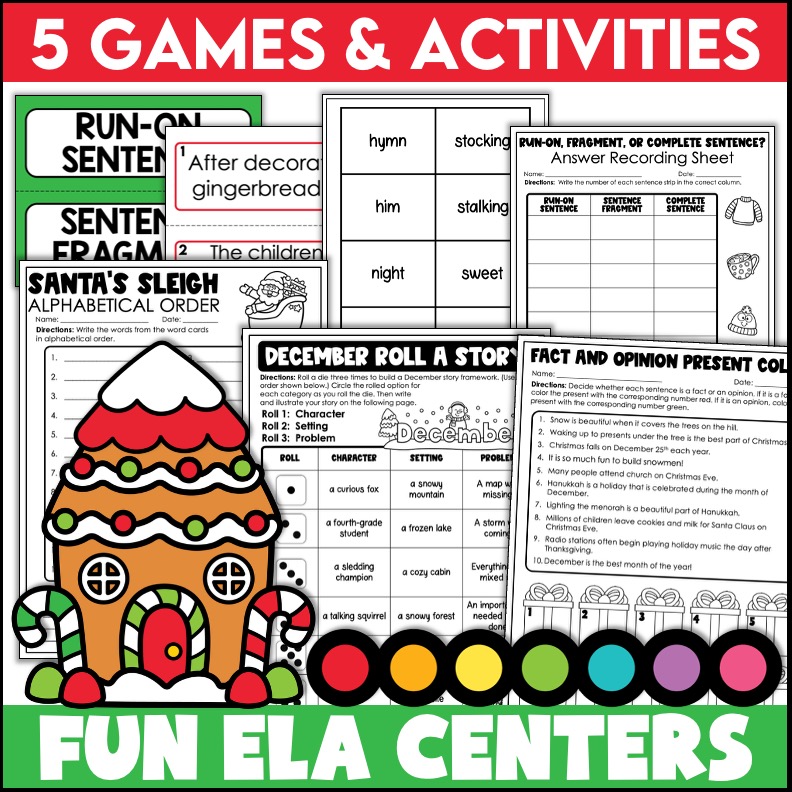
Fact and Opinion Present Color gives ten December sentences; facts are colored red and opinions green on numbered presents. Ho-Ho-Homophone Match-Up is a memory game for two to four players with 16 homophone pairs, from sleigh and slay to Yule and you'll. Run-On, Fragment, or Complete Sentence is 24 sentence strips sorted under three labels, on a table or in a pocket chart, with a recording sheet. Santa's Sleigh is 24 word cards (toys and gifts) put in alphabetical order against a timer, then written on the recording sheet. And two Roll-a-Story pages, December and Christmas: three rolls of a die pick a character, a setting, and a problem, and students write and illustrate the story.
Five ways to use the centers:
- A center rotation the week before break: one center a day, and the recording sheets come in on Friday.
- Print the homophone cards and sentence strips on cardstock once, and they come back out every December.
- Teach the sentence sort as a whole-class pocket-chart lesson first, then move it to a center.
- Run Santa's Sleigh as a timed partner race, with the recording sheet as the check.
- Keep Roll-a-Story in the sub folder: the directions are on the page, and all it needs is a die.
Two writing activities: a holiday haiku and a holiday tradition
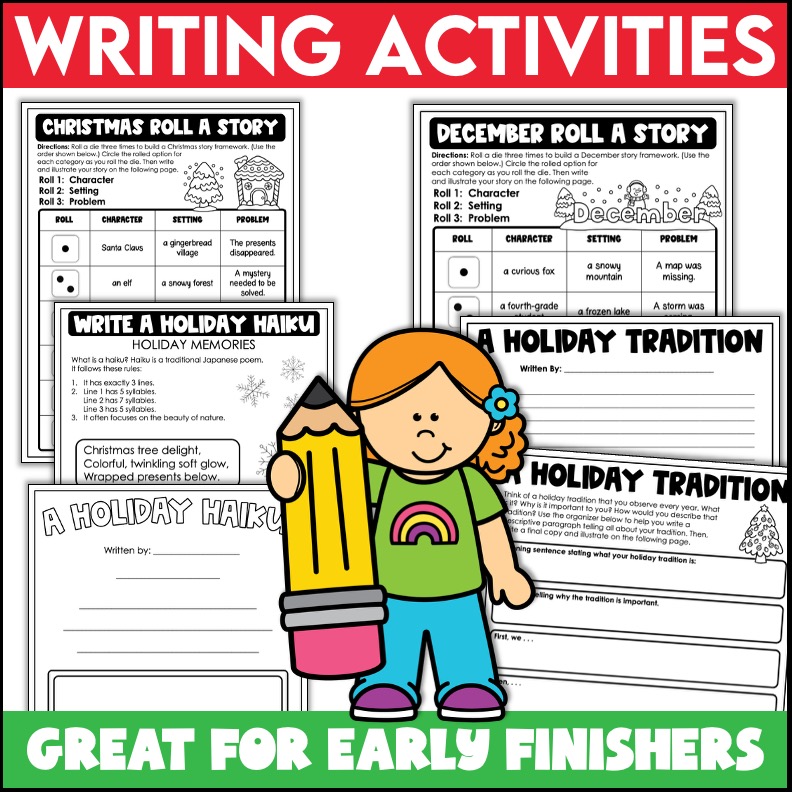
The haiku pages teach the form (three lines of five, seven, and five syllables) with three examples, including a Hanukkah dreidel haiku, then give a planning page and a framed final-copy page to illustrate. A Holiday Tradition is a descriptive paragraph with a graphic organizer: an opening sentence, a sentence on why the tradition matters, First, Then, Next, Finally, and a closing sentence, with a final-copy page.
Five ways to use the writing activities:
- The haiku as a twenty-minute mini lesson; the finished poems become the December bulletin board.
- A Holiday Tradition as the writing piece to share at conferences or send home as a keepsake.
- Use the organizer to teach transition words (First, Then, Next, Finally) before students write any paragraph.
- Keep the haiku pages in the writing center all month for early finishers.
- Pair the tradition paragraph with the Christmas Traditions Around the World passage for a compare-and-contrast talk.
Six writing prompts with scoring rubrics
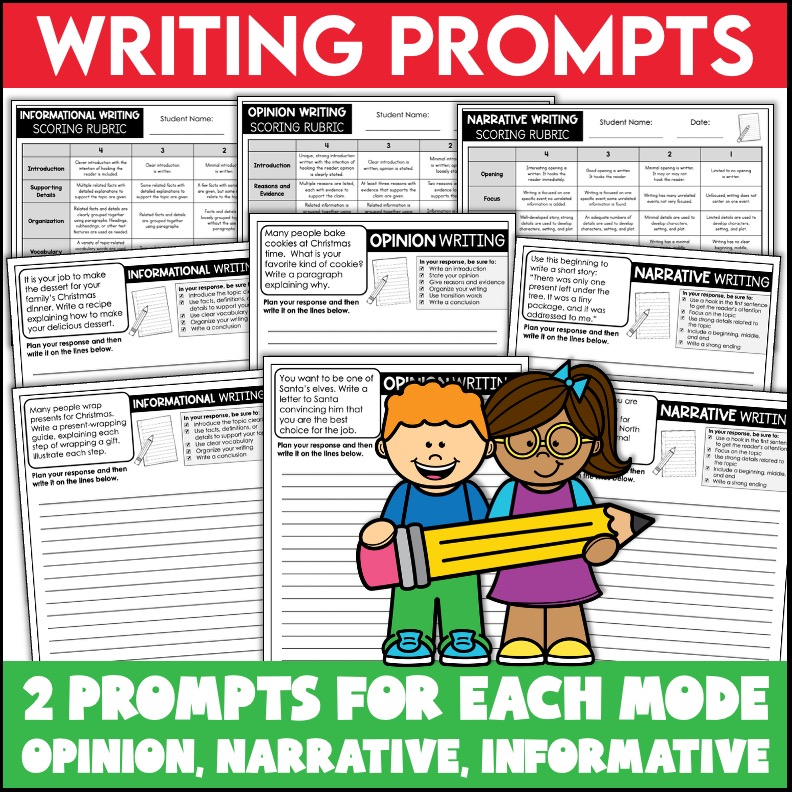
Two prompts for each mode. Informational: a recipe for your family's Christmas dessert, and a present-wrapping guide with illustrated steps. Opinion: your favorite kind of cookie and why, and a letter to Santa convincing him you are the best choice for elf. Narrative: a story that begins with one tiny present left under the tree, addressed to you, and a journal entry from an elf at the North Pole. Each prompt page carries a checklist in the margin (introduce the topic, give reasons and evidence, use a hook, write a strong ending) and lined space, and there is a four-point scoring rubric for each mode.
Five ways to use the prompts:
- One mode a week in December: informational, then opinion, then narrative.
- On-demand writing practice: one prompt, thirty minutes, and the rubric to score it.
- Score a sample together with the rubric first, so students see what a 4 looks like before they write.
- Let students choose one of the two prompts in each mode.
- The elf journal entry as a quick write each morning of the last week.
Daily ELA spiral review, four weeks
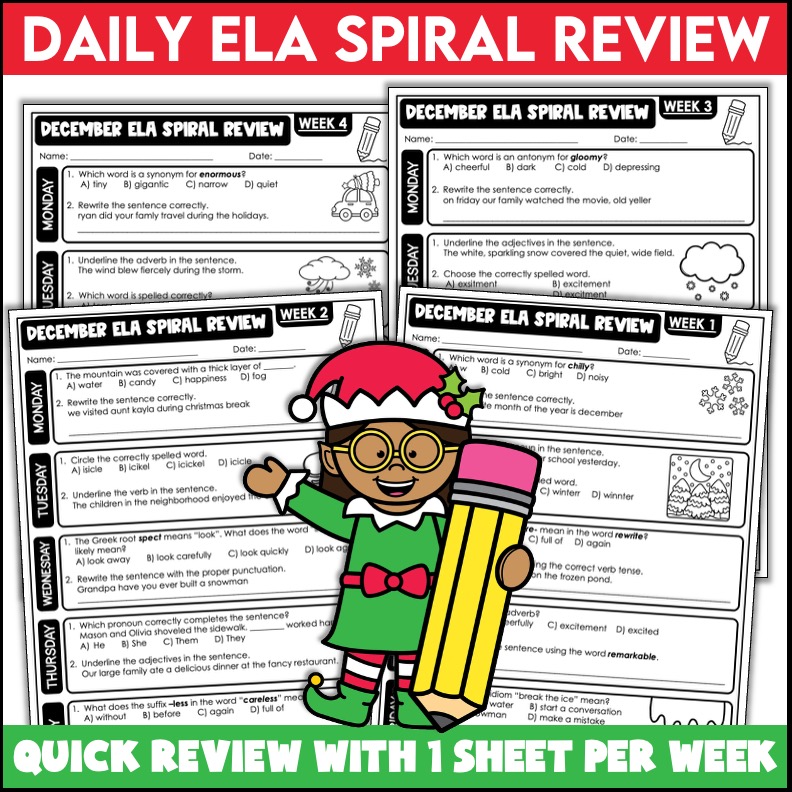
Four weekly sheets, Monday through Friday, two short tasks a day: synonyms and antonyms, prefixes, suffixes, and Greek roots, verb tense, pronouns, adjectives and adverbs, idioms, spelling, and sentences to rewrite with capitals and punctuation. One sheet per student on Monday, two tasks a day, and the answer keys are in the back.
Five ways to use the spiral review:
- Morning work: the sheet stays in the folder all week and comes in on Friday.
- Exit tickets: the day's two tasks at the end of ELA.
- Correct together each day, as the packet suggests, for a two-minute reteach while it is fresh.
- Homework for the week: one sheet, nothing to copy each night.
- A small-group warm-up: the day's tasks on the whiteboard before guided reading.
Three choice boards: reading, writing, and free time
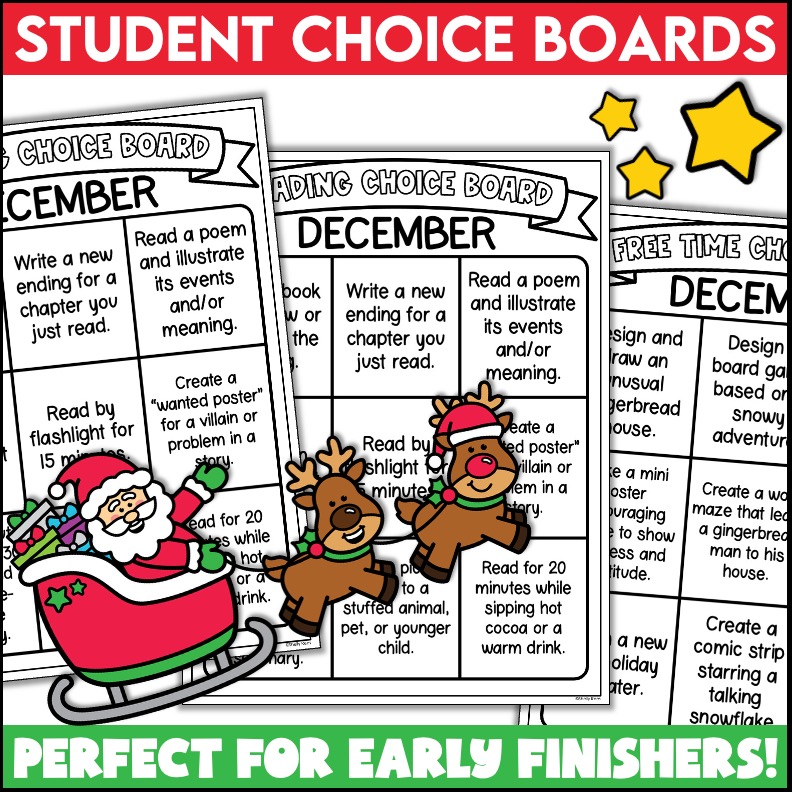
Each board has nine squares. The reading board includes Read by flashlight for 15 minutes and Create a wanted poster for a villain or problem in a story. The writing board has Write a story about a runaway gingerbread man and Create instructions for building the world's best snowman. The free-time board has Design an unusual gingerbread house and Make a December-themed bookmark. The packet's advice: give each student a board for the month and require a number of squares, not all nine, so the choice stays real.
Five ways to use the choice boards:
- Early finishers all month: the board lives in the folder, three squares required.
- December reading homework in place of a reading log.
- Indoor recess and the last day before break, with the free-time board.
- Fast finishers after a test, so nobody is waiting with nothing to do.
- Sub plans: a choice board and a book fill a whole afternoon.
Here is the free file
Click it. It opens on the downloads page. No email needed.
This packet is from the Club's Monthly Reading Units
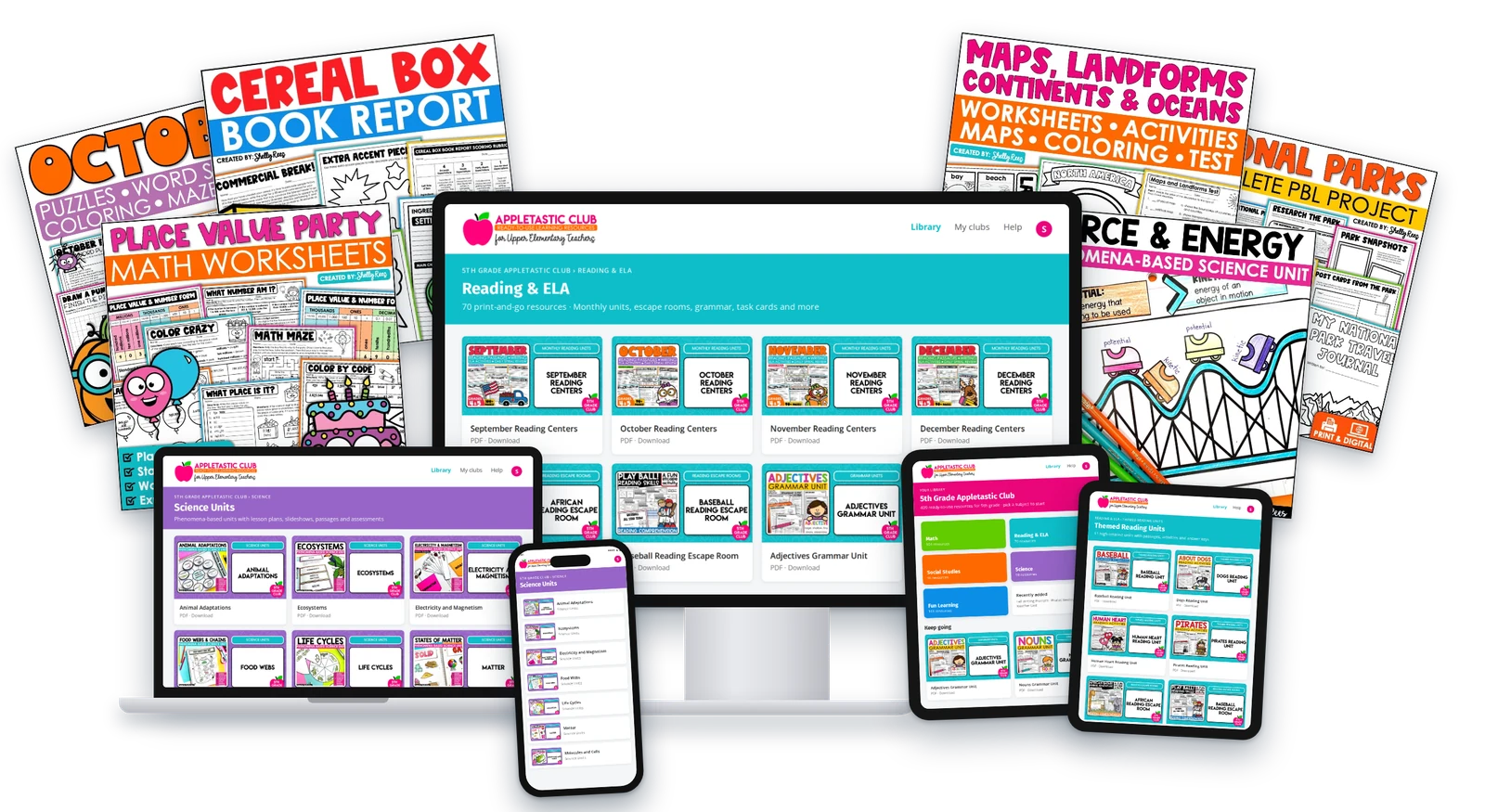
- December Reading Centers (this packet, in the 4th and 5th Grade Clubs)
- September Reading Centers
- October Reading Centers
- November Reading Centers
- January Reading Centers
- February Reading Centers
- March Reading Centers
- April Reading Centers
- May Reading Centers
See everything in the Club, grade by grade
Want every 4th and 5th grade reading and ELA resource right now?
The Appletastic Club has over 1,500 resources for 4th and 5th grade teachers: math, reading & ELA, social studies, science, and all the fun stuff, with new ones added regularly. Find what you need, print it, teach it.
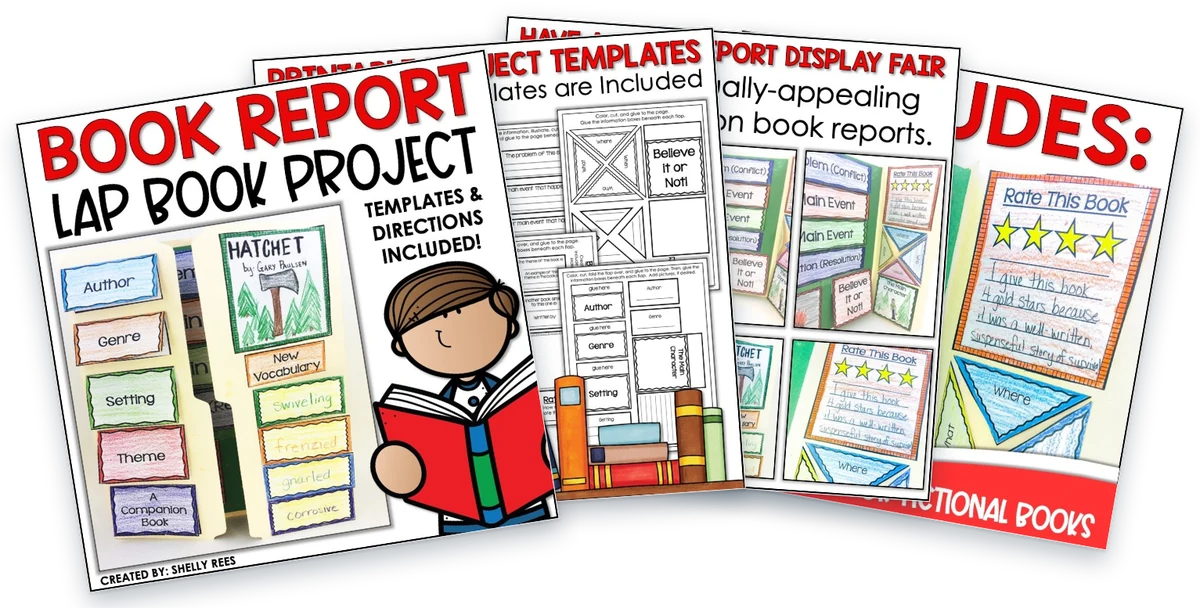
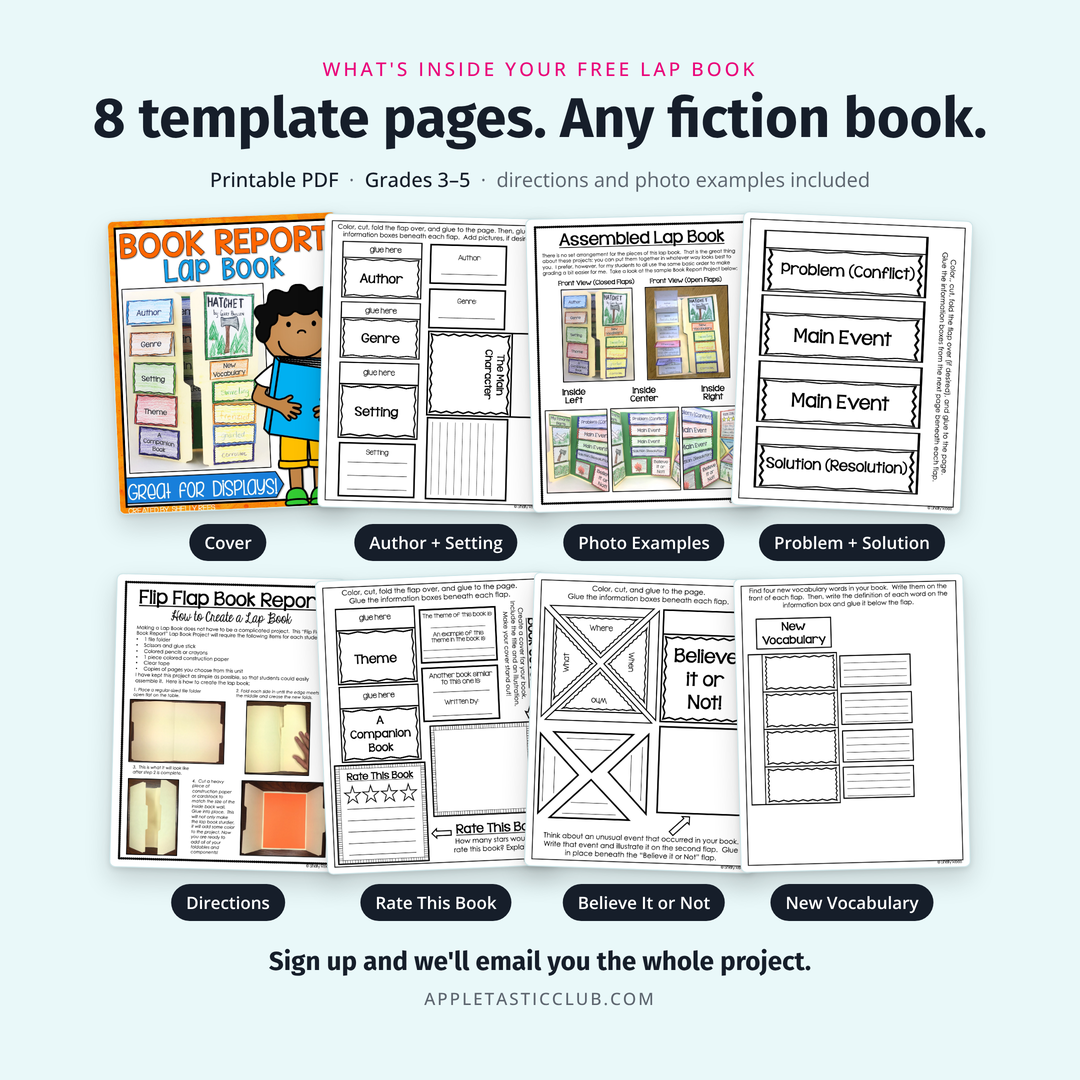
Get the Book Report Lap Book. Free.
A complete book report project for grades 3 to 5, sent to your inbox. It works with any fiction book, and it comes from the same Club this one did.
Pin this for later
Want every resource, ready to teach?
The Appletastic Club has over 1,500 resources for 4th and 5th grade teachers: math, reading & ELA, social studies, science, and all the fun stuff. Find what you need, print it, teach it.
Get the Book Report Lap Book. Free.
A complete book report project for grades 3–5, sent to your inbox. It works with any fiction book.
We are teachers. Your email is safe with us.